
All About the Lionhead Bunny
Tiny, cute, and extra fuzzy, Lionheads are among the newest breeds of domesticated rabbits in the United States and are already one of the most popular breeds. If you’ve decided that a rabbit is the right pet for you and are facing choosing a breed, already have a Lionhead and want to learn more about them, or are just curious about them, this article is for you! These rabbits are adorable and can make excellent pets—but please make sure to do plenty of research before adding one to your home.

Breed History
Although the Lionhead is one of the newest US rabbit breeds, its exact history is unknown. One belief is that Lionheads were first produced in Belgium as a cross between the Swiss Fox and a Belgian Dwarf. Other breeds, possibly the Jersey Wooly and/or Dwarf Angora, were then thought to have been added to the mix to help produce the Lionhead’s signature wooly mane.
Another theory is that Lionheads were produced in England by Dwarf Angora breeders. It is thought that the reduced mane present on today’s Lionheads could have been a random mutation that reduced the amount of wool produced by Dwarf Angora rabbits.
However it was first produced, the Lionhead breed grew in popularity amongst pet owners and, eventually, rabbit breeders and showers. The British Rabbit Council first recognized the breed in 2002.
They were first introduced in the United States in 1999, and American breeders worked to refine the breed into what it is today. Other breeds such as the Netherland Dwarf, Holland Lop, Florida Whites, Britannia Petite, Polish, Jersey Wooly, Mini Rex, Dutch, American Fuzzy Lops, and New Zealands were reportedly used early on to help improve genetic diversity as well as to help shape the appearance and temperament of the breed.
Appearance
Lionheads are known for more than just their signature mane.
Size and Color
Lionheads are small (normally only around 3–4 pounds), erect-eared rabbits. They come in a wide variety of colors or broken patterns, meaning that they are mostly white with spots of other colors. Colors include:
| otter | orange | chocolate |
| agouti | blue | black |
| red | red-eyed white | red-eyed white |
| sable point | seal | sable marten |
| siamese sable | smoke pearl | pointed white |
| tortoise |
Mane
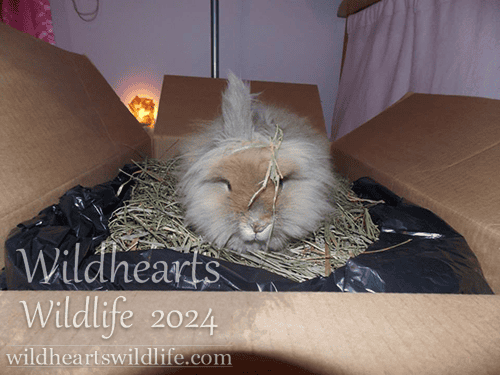
Probably the Lionheads most unique physical feature is the long wooly mane that gives the breed its name. Because of the way the dominant mane gene works, Lionheads can be born with no mane at all, a double mane gene, or a single mane gene. Lionheads with the mane gene should have long wooly fur growing around their head, similar to the mane of a lion.
Double-Mane
Lionheads may also develop wool down around their flanks as well. This is most common with double-maned (carriers of two mane genes) animals. Wool may grow in other areas such as on the face, ears, stomach, back, or other areas of the body, although this is not considered a desirable trait for show rabbits (they can still make adorable pets).
The wool around a Lionheads face should be noticeably different than normal rabbit fur. It is normally longer and has a different texture than a rabbit’s regular fur. The wool on a Lionhead is similar to the wool found on other breeds such as Angora rabbits.
Temperament
Lionheads are thought of as easy-going rabbits. They are oftentimes described as having level temperaments. If cared for properly, many of them will be friendly and seem to enjoy interactions with humans. Remember that all animals are individuals, so they will all have their own personalities.
Health
If cared for properly, Lionhead rabbits are a generally healthy breed.
Lifespan
Domestic rabbits, in general, live on average between 7 and 12 years. Lionheads usually follow this trend and, being a small breed rabbit, have a higher chance of making it to the top of that range. It’s not that unusual for small breed rabbits to surpass the 12-year mark and survive well into their teens.
Dental Issues
Being small doesn’t mean all good things, though, as smaller dwarf breed rabbits are oftentimes more prone to dental issues.
Grooming
Because of their long wooly fur, it’s also important to keep your Lionhead well-groomed so that they do not ingest too much fur. Check their hair regularly for mats or tangles.
Diet
Feeding these rabbits a proper, high-fiber diet is important as eating the proper foods can help to both keep the teeth healthy and also keep the digestive system in good working order. Like all other rabbits, lionhead’s diet should consist mainly of hay. They should be offered hay in unlimited quantities, along with limited amounts of additional foods such as healthy pellets and fresh vegetables and greens. Treats can be given in moderation.
Spaying and Neutering
Pet rabbits should be spayed or neutered to make the best companions possible and also to eliminate some potentially deadly health problems.
Lionhead Rabbits Are Great Pets for the Right People
Rabbits, Lionheads included, can make amazing pets for the right people. It’s important to remember that these small creatures are not disposable. If you are thinking of taking one into your home, keep in mind that they often live 10 years or more.
Just like any other type of pet, rabbits require individual specialized care to live long, happy, and healthy lives. Make sure you do plenty of research into their care and find a rabbit-experienced vet before getting your new pet. If you take the time to make sure you are properly providing for your rabbit, you will be rewarded with an engaging, social, adorable friend.