
Seasoned pet owners know that dealing with parasites is a part of caring for our pets. Not the most pleasant part, but still a part. Most people are aware that using parasite preventatives, or dealing with infestations as they come, is pretty standard when it comes to cats and dogs. But did you know that exotic pets can contract parasites as well? Yes, even aquatic exotics, like axolotls!
How Do Axolotls Catch Parasites?
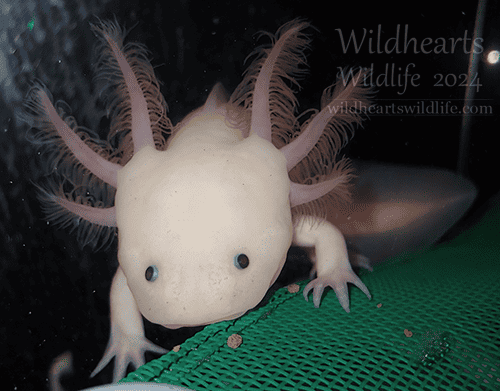
The main way axolotls come into contact with parasites is through live foods. Because the healthiest food available for captive axolotls is earthworms, it means that most axolotls, at least those being fed a proper diet, are being fed live foods. Besides earthworms, other live foods such as fish, and shrimp, can expose axolotls to parasites as well.
Besides live foods, axolotls can also be exposed to parasites when they are kept with tankmates infested with parasites, or by exposure to equipment (nets, siphons, aquarium decor, etc.) that was used in an infected aquarium and not disinfected properly.
How To Avoid Your Axolotl Catching Parasites
Unfortunately, you can’t always 100% avoid things like your pet catching parasites, but there are steps you can take to reduce the chances that your axolotl will be exposed.
- Don’t Feed Your Axolotl Wild-Caught Prey. It can be tempting to feed your axolotl worms you catch out in your yard. But worms, or any other types of feeders, caught outside have a greater chance of carrying parasites, and can also expose your pet to other diseases or toxins. It’s best to purchase and feed your axolotl captive-bred food items only.
- Don’t Feed Live Fish. Feeder fish are somewhat notorious for being unhealthy and potentially containing parasites. Axolotls don’t need live fish in their diet, so the easiest option is just not to feed them fish at all.
- Quarantine Live Feeders. If you really want to feed things like feeder fish or shrimp, you should quarantine all new feeders before offering them to your axolotl. Better yet, if you have the space and time, breed your own feeders.
- Quarantine New Tank Inhabitants. If you’re planning on keeping multiple axolotls together, new additions should be quarantined for a minimum of 3 months before introducing them into your established tank.
- Don’t Share Equipment Between Tanks. If you have multiple aquariums, no matter what type of critters you keep, avoid using the same equipment between multiple tanks. This can introduce parasites from one tank to another.
Signs Your Axolotl Might Have Parasites
Signs/symptoms that your axolotl has parasites can vary depending on what parasite they’ve been exposed to, but some general symptoms include…
- Weight Loss. Internal parasites can cause your axolotl to lose weight, even if they continue to eat normally.
- Loss of Appetite. Some axolotls with parasites may lose interest in food.
- Lethargy. A decrease in activity can be a sign your axolotl isn’t feeling themself.
- Gill Deterioration. Signs of stress or illness will often show up in your axolotls gills. Look for gills that begin to shrink, or curl.
- Skin Issues. Skin abnormalities, especially if they are new and appear suddenly, such as cloudiness, a peeling slime coat, blisters, or red inflamed spots can be a sign of external parasites.
- Bloating. Parasites can sometimes lead to bloating or edema. Your axolotl may look larger than normal or have trouble swimming normally.
- Visible Worms. Yeah, it’s gross, but sometimes you will be able to see worms in your axolotl’s stool or vomit. Some external parasites, like anchor worms, may be visable on your axolotl’s skin.
- Vomiting. Yes, axolotls can vomit, and it can be a sign of internal parasites.
- Air Gulping. This is a serious sign of a more advanced parasite load, but parasites can cause your axolotl to swim more near the surface of the water to gulp air.
- Swollen Cloaca. Parasites may cause your axolotl’s cloaca to look red, and/or swollen.
Important Note: Unfortunately, besides actually seeing parasites on your axolotl’s skin or in their stool, these are not definitive signs of just parasites. Many of these symptoms could be caused by a wide array of health concerns, parasites being just one option. Gill deterioration, for example, can be caused by poor water quality, and bloating can be due to organ failure. Your best option, if your axolotl is showing signs of any of these health issues, is to consult with an axolotl experienced veterinarian.
What Types of Parasites Can Axolotls Catch?
The types of parasites you have to worry about in axolotls include roundworms (Capillaria, Spironucleus), external protozoa (Trichodina, Chilodonella, Ichthyobodo), crustaceans (Anchor worms (Lernea), Fish lice (Argulus)), and flagellates (Hexamita, Opalina).
Treating each of these types of parasites will be different. Unfortunately, there’s not a ‘cure-all’ solution that eliminates all types of axolotl parasites. Again, your best bet if you suspect your axolotl has parasites or is otherwise sick, is to consult with an experienced vet. They’ll be able to accurately diagnose your gilled friend, and prescribe the correct medication for the exact type of parasite your axolotl is suffering from.
Preventative Deworming
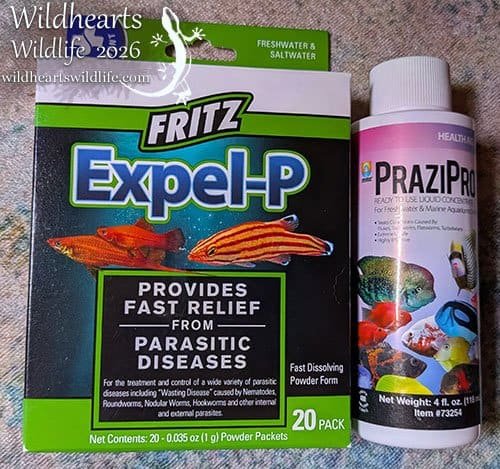
Depending on who you ask, experienced axolotl keepers will sometimes recommend preventative deworming for axolotls. Because axolotls’ main food source is earthworms, it’s common for axolotls to be exposed to parasites every once in a while, even despite their owner’s best efforts to avoid them. Some owners, especially breeders or people who keep a lot of axolotls, preventively deworm their axolotls once every 6 to 12 months.
I never used to preventatively deworm my axolotls, that is, until I experienced all 3 of my personal axolotls coming down with roundworms all at the same time. Yeah, that was not fun. Thankfully, with the help of our vet, all three pulled through, although having all of my aquatic buddies being sick at the same time was stressful to say the least. Now I personally deworm my own axolotls once a year. Any new additions or fosters are also dewormed during their quarantine period.
There are two commonly used over-the-counter deworming medications that can be safely used on axolotls. They are Prazipro (Praziquantel) and Expel P (Levamisole). Fenbendazole and Metronidazole are also axolotl safe, but are typically recommended as oral medications, which can be hard to administer to axolotls, especially ones who are sick and may be refusing food.
Deworming Axolotls with Prazipro
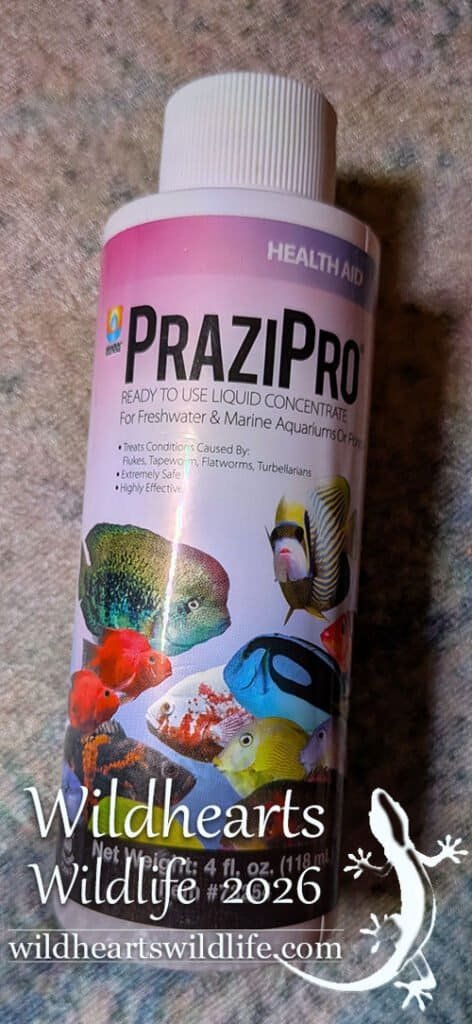
Prazipro treats flukes, turbellarians, flatworms, and tapeworms. It is the safer of the two ‘at home’ deworming options, but, unfortunately, doesn’t treat more common parasites such as nematodes and roundworms.
I personally deworm my axolotls in tubs, but Prazipro can also be used directly in-tank. The dosage for in-tank treatment is 1 teaspoon of Prazipro per 20 gallons of tank water. You typically only need to dose Prazipro in-tank once. One dose will last 5 to 7 days. These instructions can be found on the back of the Prazipro bottle.
Here is how I personally deworm my axolotls using Prazipro in tubs:
- Measure out 5 gallons of water in a clean bucket, tote, or unused aquarium. Add 1/8th a teaspoon of Prazipro.
- Take water from your treated 5 gallon Prazipro mix and add it into your axolotl’s tub. Add Prime or whatever water conditioner you typically use.
- Replace your axolotl’s tub water daily, the same as you would if you were tubbing them normally, but, instead of using regular water use water out of your 5-gallon container that you treated with Prazipro.
- Do this daily for 1 week, then move your axolotl back into their cycled aquarium or start tubbing them in regular water again.
The dosage of Prazipro is small. Don’t worry, it’s enough! Don’t be tempted to up the dosage. Axolotls are especially sensitive to chemicals.
Deworming Axolotls with Expel P
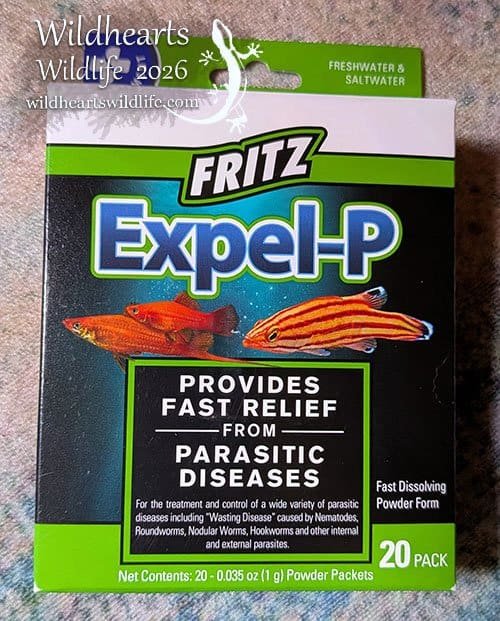
A note about Expel P: The active ingredient in Expel P is Levamisole. While generally considered to be safe for axolotls, it’s very important to dose Levamisole correctly. Compared to other axolotl safe drugs, Levamisole has a narrower margin of safety. In cases of overdose, Levamisole can cause respiratory failure, leading to death, in axolotls. Even at the correct dose, Levamisole can be especially harsh on animals who are already compromised, including axolotls who are sick and/or stressed. Use this drug with caution, ideally under the direction of a vet. Your vet may recommend an alternative treatment, typically Fenbendazole, if they feel your axolotl cannot handle a Levamisole treatment.
Expel P (Levamisole) treats against the more common axolotl parasites, nematodes and roundworms. Like with Prazipro, it can be used as an in-tank treatment or in a tub. The in-tank treatment can be found on the Expel P box, but it involves adding 1 treatment packet per 10 gallons of aquarium water. After 24 hours, you must vacuum out 25% of the water, paying special attention to the floor of your tank because paralyzed parasites may collect there. After a week, repeat the treatment.
Here is how you can use Expel P in a tub:
- Create your stock solution by mixing one packet of Expel P with 10 gallons of water in a clean container.
- Add your stock solution to your axolotl’s tub, also add Prime or your water conditioner of choice.
- Tub your axolotl in the Expel P solution for 24 hours. (Monitor closely for signs of distress. Remove your axolotl ASAP and tub in clean, cool water, if they show signs of distress.)
- As long as your axolotl takes the treatment well, leave them in the treatment water for a full 24 hours. After that, move them into a clean tub with just fresh, clean, Prime treated, water. The actual treatment period in Expel P treated water should only last 24 hours.
- Keep your axolotl tubbed for the next week (in just regular water!), following typical tubing procedures (cleaning their water daily). You may see dead/dying worms at the bottom of the tub, especially the day after treatment. These should be cleaned out promptly.
- One week later, repeat this process. Tub your axolotl in Expel P for 24 hours, then move them back into cool, clean, fresh water. After the second treatment, which should take care of any roundworm eggs that may have hatched in between treatments, your axolotl can be returned to their regular tank.
Once mixed with water, Expel P remains active for up to 90 days. This means that you can use some of your stock solution for your first 24 hour treatment, then save the rest and use what’s left for your second 24 hour treatment a week later. However, keep in mind that Levamisole is light sensitive. If you decide to store the solution for a week, keep it somewhere dark.
Keep Those Axolotls Worm Free!
I’ve personally used both of these at-home deworming treatments successfully with my own axolotls, as well as many, many foster axolotls. But again, as a friendly disclaimer, you really should consult with an experienced axolotl veterinarian if at all possible before deciding to use any medications for your axolotls.
Remember that prevention can be the best ‘cure’. Once an exotic pet like an axolotl gets sick, it can sometimes be hard to get them healthy again. I use yearly deworming as a preventative measure to help keep my axolotls healthy, because I feed them live earthworms.
Keeping your axolotl healthy in general, such as making sure they live in clean, cycled water, feeding them a healthy diet, and making sure they stay stress-free, can go a long way towards keeping them healthy as well! You may not always 100% be able to eliminate parasite exposures, but a happy axolotl living in a clean aquarium will handle treatment way better than an axolotl that’s being kept in sub-optimal conditions. Know the signs that your axolotl may be sick as well, so you can catch any potential illness, parasites included, as quickly as possible. Remember, our axolotls count on us to make sure they are able to live long, healthy, happy lives!
———————
Unfortunately, Wild Hearts Wild Life has been dealing with content scrappers stealing our content and posting it to other websites without permission. If you’re seeing this article posted anywhere besides wildheartswildlife.com it means you are seeing it on a content scalper’s site. Please consider contacting us to let us know, and stopping by to visit on our actual site! Thank you!