
Whether you are dealing with rehabbing a rescue, recently acquired a new snake, or are a seasoned corn snake owner, evaluating your snake’s weight isn’t always the simplest of tasks. Most people can easily tell if a mammal, like a cat or dog, is too thin, but figuring out if your reptile is a healthy weight can sometimes be more challenging.
So how do you tell if your corn snake is a bit underweight? And what changes can you make to help them gain, then maintain, a healthy weight?
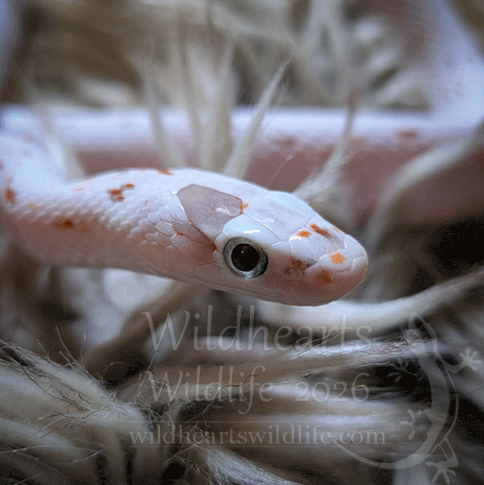
How To Tell if Your Corn Snake is Underweight
I know it sounds a bit silly, but a healthy corn snake should resemble a loaf of bread. If you think about looking at a cross-section of your snake, like a slice of bread, they should be flat at the bottom, relatively flat along the sides, and slightly rounded at the top.
A corn snake that is too thin will have a more triangular shape. Instead of a slice of bread, their cross-section will look more like an inverted “V”. Their spine will protrude, and their sides may appear sunken or angular from their bellies to their spine, rather than flat or slightly rounded. I drew this (bad) picture that attempts to show the differences between a skinny, healthy, and overweight corn snake…
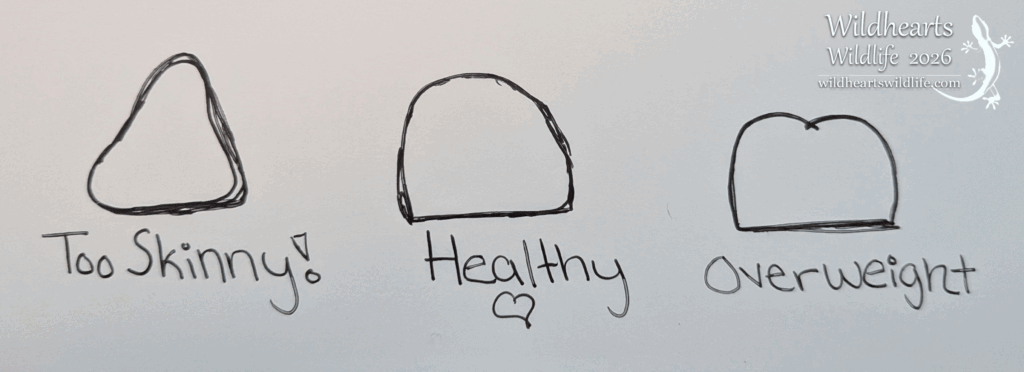
A corn snake that is underweight may also appear to have baggy or loose skin. You’ll be able to easily feel their spine during handling. Depending on how long they’ve been underweight for, and the cause, snakes that are underweight may display behavioral changes such as moving more slowly, appearing lethargic, or just in general acting off or sick.
*If any has photos of a corn snake that’s too thin that they’d be willing to share with me please contact me. I’d love to be able to show examples of what a thin snake looks like. Credit will be given for any photos shared.
If you’re experiencing the opposite problem, and your corn snake is overweight, check out my post on helping overweight corn snakes instead…
How to Help Your Underweight Corn Snake
Realizing that your snake needs a bit of extra support is half the battle!
Unlike a snake being overweight, which is almost always caused by simple overfeeding, a snake being too skinny can sometimes be caused by health issues. Intestinal parasites is a common cause of a reptile being too thin, for example, and can cause even snakes who are eating normally to lose weight. Other illnesses can cause your snake to lose weight as well. If you suspect your skinny snake is sick or infested with parasites, it’s important to consult an experienced reptile vet.
Ensure that you are keeping your snake in a proper enclosure. Sometimes snakes kept in inadequate conditions will refuse food or have trouble digesting when they do eat. Pay special attention to your temperatures, as being too cold to digest food is a common cause for corn snakes refusing meals.
However, sometimes a snake being too skinny is just a case of them not being fed enough. This is especially common in rescues who may have not been receiving the best care. If you believe your corn snake being underweight is just a case of not receiving enough food, your best bet is to offer slightly larger prey items. If your snake isn’t quite ready to size up in prey size, or refuses to eat larger food, you can instead try offering multiple smaller mice (such as two fuzzy mice for snakes who refuse hoppers or small adults).
Feed your snake regularly, but avoid power feeding. Increasing the frequency of food for an underweight snake isn’t usually advised because they need time in between meals to properly digest. Depending on the size of your snake, feeding from once every 5 – 6 days (for a very young/small snake) to once every two weeks (for an adult) can be normal.
Steps Towards a Healthier Snake
Don’t expect instant results. It most likely took a while for your snake to get too skinny. It’s going to take time for them to gain weight too. Slow and steady for the win! Usually, for a healthy snake, the best thing you can do is provide them with a proper setup and a regular feeding schedule and they’ll be able to not only gain weight but also continue to maintain it once they hit a healthy weight.
Stay the course and remember that helping your exotic pet maintain a healthy weight is going to go a long way towards ensuring they can enjoy a long, healthy life!
———————
Unfortunately, Wild Hearts Wild Life has been dealing with content scrappers stealing our content and posting it to other websites without permission. If you’re seeing this article posted anywhere besides wildheartswildlife.com it means you are seeing it on a content scalper’s site. Please consider contacting us to let us know, and stopping by to visit on our actual site! Thank you!