
Yes…Carefully, if you need too.
Imagine if I stopped there? This would go down in history as my shortest post ever. You know my long-winded self is gunna say more, though!
Perhaps a little-known fact, the Wild Hearts actually live in the frozen tundra. Okay…maybe not exactly the frozen tundra, but it sure does feel like it lately! We’ve had multiple weeks with lows in the single digits and ‘feels like’ temperatures well into the negatives. Fun.
For…reasons….I am not currently able to set up the nice, independently climate-controlled critter room of my dreams. That means that all of my exotics need to have their temperature needs completely addressed individually, including my axolotls. I have three axolotls currently – Nova and Gilly, my females who share a tank, and Bubbles, my male who is living life large in his own bachelor tank.
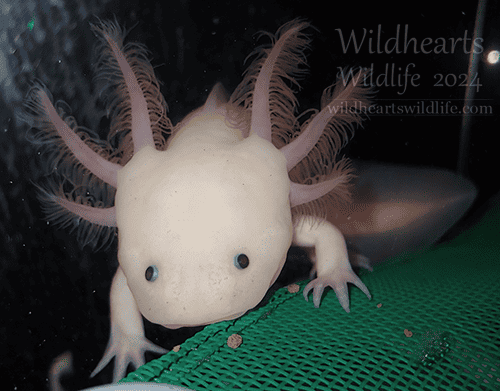
Axolotls are notoriously cold-water critters. Most people who keep them have much more trouble ensuring that their aquariums stay cool enough. Many owners will never have to deal with axolotl tanks that get too cold. If you’re ‘most owners’ then you’re probably not actually here reading this. Fellow lovers of all 4 seasons, including the one where your boogers freeze after 2 seconds of standing outside, welcome.
How Cold Is Too Cold For Axolotls?
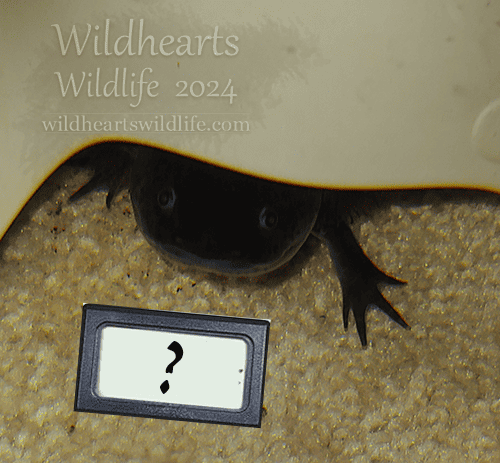
The ideal temperature range for the water in an axolotl aquarium is between 58*F and 68*F. 65*F is a good temperature to aim for, although a bit warmer, or cooler, is safe too. Water temperatures over 75*F, especially for an extended period of time, can be dangerous for axolotl.
Although they thrive in cooler water, your axolotl aquarium can get too cold! 50*F is the minimum temperature you should keep your axolotl in for any length of time. While axolotl can survive in colder temperatures, as long as their water does not freeze, surviving is not the same as thriving. At temperatures below 50F, your axolotl’s metabolism will be drastically decreased. They will seem lethargic, dull, may stop eating, and will decrease their blood flow in order to absorb more oxygen through their skin.
Other Factors to Consider…
Each animal is an individual. Over the years, as I’ve kept and cared for many axolotls (besides my own three I also occasionally foster axolotls) I’ve noticed that individual axolotls do actually seem to have preferences when it comes to temperatures! While my two females do quite well in temperatures near the low end of the recommended temperature range, my male, Bubbles, has always seemed to really thrive when I keep his tank more on the warmer side. Not too warm, of course, but Bubbles very much seems to appreciate his water being closer to the higher end of the safe temperature range.
Is your aquarium planted? I try to always keep at least a few live plants in with my axolotls. And while there are some cold water aquarium plants, I’ve personally noticed that my aquatic plants do better when I don’t let my water temperatures get too cold.
So, Can You Use Aquarium Heaters With Axolotls?
Some sources will say that you will never need a heater for an axolotl aquarium. Those people, however, clearly don’t live in the frozen tundra.
Recently, my axolotl tanks have been getting down to the low/mid 50’s (yes, inside my house). While these temperatures are technically within the survivable temperature range for axolotls, I’ve noticed that Bubbles, especially, has not been loving living in such cold water, and my aquatic plants haven’t been doing as well either. Despite the taboo, I decided to use an aquarium heater in Bubbles’ aquarium. So far, I haven’t added one in with the girls (Gilly and Nova) but it’s not out of the question, especially if our temperatures continue to be as cold as they have been.
Signs Your Axolotl May Be Too Cold
- Lethargy: When axolotls start to get too cold, they may act lethargic and move around less, or more slowly, than what is normal for them. This can sometimes be hard to determine, since axolotls are not the most active critters to begin with. Hopefully, you’ll be familiar with your axolotl’s normal activity levels so you can more easily detect any abnormalities.
- Food Refusal or Decreased Appetite: Especially cold temperatures will decrease your axolotl’s metabolism. A decreased metabolism will often mean that your axolotl may eat less, or completely refuse food.
- Dull Appearance: This is most noticeable in light-colored axolotls. In extreme cold they may appear dull or pale.
*These symptoms are not always caused by cold, and can sometimes be signs of illness.*
Safety Tips for Using an Aquarium Heater with Axolotls
It’s always important to use heating elements safely! It’s even more important with axolotls, because overheating them is dangerous and can lead to death.
This post contains affiliate links, notably Amazon affiliate links. If you click on one of our links and make a purchase we will receive a small commission at no additional cost to you. Thanks so much for your support!
- Apply Moderate Heat: Although the top of the temperature range for axolotls is 68*F, I never use a heater to get the tank water that warm. For my own axolotl, I aim more for around 60*F. This warms up the water enough that Bubbles is more comfortable, but gives me peace of mind that I’m not getting too close to the top of the safe temperature range. This way, if my temperatures are off a bit and the heater warms up the water a few extra degrees, I still don’t have to worry about Bubbles overheating.
- Use Proper Equipment: Make sure you purchase heaters rated for whatever size aquarium you have, and never skip using an aquarium thermostat! I also recommend using additional thermometers as well.
- Use A Thermostat!: I know, I already said it. DO NOT skip using a thermostat when using a heater for axolotls. When used properly, it will prevent your heater from overheating your aquatic friend.
- Closely Monitor Your Temperatures: Use additional analog or digital thermometers to keep a close eye on your water temperature. Check your temperatures often. At least daily – more often if possible.
- Use Only as Needed: Most people who need to use heaters for their axolotls will only need to use them during the coldest months of the year. Once your local temperatures start to warm up again, remove the heater.
Do You Heat Your Axolotl Tank?
Some sources will argue that axolotl water should never be heated. Hark, thee fellow frost dwellers, they know nothing of the frigid lands whence we dwell!
While it is very much true that axolotls are cold-water animals, that doesn’t necessarily mean that they will never benefit from having an aquarium heater. An aquarium heater can safely be used in axolotl setups as long as it’s done so very carefully and only strictly as needed.
———————
Unfortunately, Wild Hearts Wild Life has been dealing with content scrappers stealing our content and posting it to other websites without permission. If you’re seeing this article posted anywhere besides wildheartswildlife.com it means you are seeing it on a content scalper’s site. Please consider contacting us to let us know, and stopping by to visit on our actual site! Thank you!